

Anxiety is a normal human emotion. Everyone feels nervous or uneasy from time to time—before an exam, during stressful situations, or when facing uncertainty. However, when anxiety becomes persistent, overwhelming, or difficult to control, it may be classified as an anxiety disorder. This can interfere with daily life, work, relationships, and overall well-being.
This article provides a medically accurate, easy-to-understand explanation of anxiety, its symptoms, causes, and evidence-based treatment approaches. It is written to support individuals seeking reliable mental health information in Bangkok or anywhere in the world.
What Is Anxiety?
Anxiety is the body’s natural response to stress. It activates the “fight-or-flight” system, preparing you to deal with danger. But when this response is triggered too often—or without a real threat—it can create constant worry, physical tension, and emotional discomfort.
Anxiety disorders occur when:
Anxiety is excessive
Anxiety lasts for weeks or months
Anxiety affects daily functioning
Physical symptoms appear without a clear medical cause
Anxiety disorders are among the most common mental health conditions and are highly treatable.
Common Symptoms of Anxiety
Symptoms of anxiety vary, but they typically include emotional, physical, and cognitive components.
Emotional Symptoms
Excessive worrying
Restlessness or feeling “on edge”
Irritability
Difficulty relaxing
Feeling overwhelmed easily
Physical Symptoms
Rapid heartbeat
Muscle tension
Sweating or trembling
Shortness of breath or tight chest
Stomach upset or nausea
Dizziness or feeling faint
Sleep disturbances
Persistent fatigue
Cognitive Symptoms
Difficulty concentrating
Racing thoughts
Fear of worst-case scenarios
Overthinking or overanalyzing situations
These symptoms may occur occasionally or persist throughout the day.
Types of Anxiety Disorders
There are several forms of anxiety disorders, each with unique characteristics.
Generalized Anxiety Disorder (GAD)
Chronic worrying about multiple areas of life (work, health, finances, relationships).
Panic Disorder
Recurrent panic attacks with physical symptoms like rapid heart rate, trembling, or breathlessness.
Social Anxiety Disorder
Intense fear of social situations or performance situations.
Specific Phobias
Strong fear of particular objects or environments (heights, flying, needles, etc.).
Health Anxiety
Persistent worry about having a serious illness despite medical reassurance.
Obsessive–Compulsive–Related Anxiety
Intrusive thoughts or repetitive behaviours used to reduce anxiety.
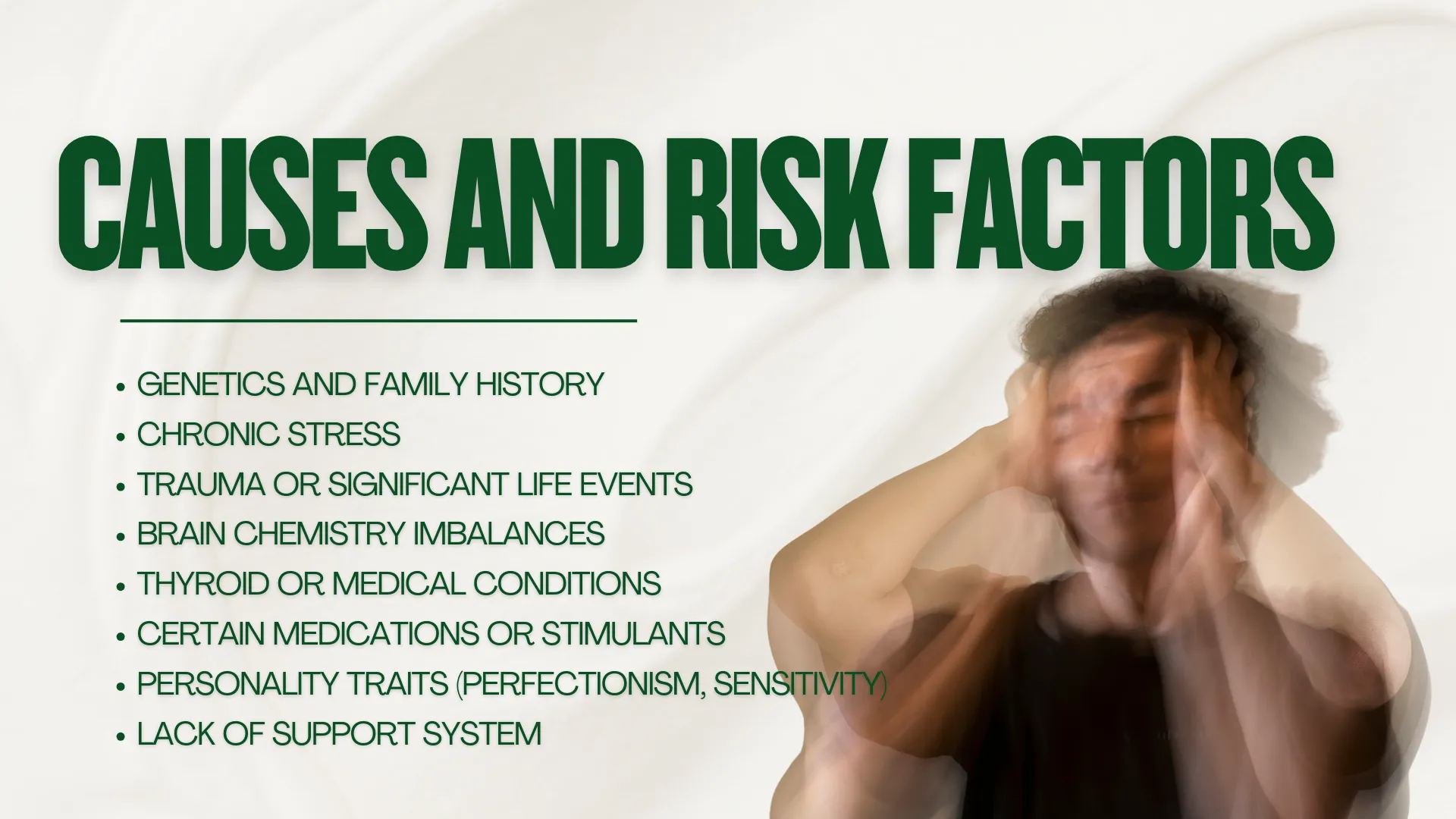
What Causes Anxiety?
Anxiety arises from a combination of biological, psychological, and external factors.
Biological Factors
Genetics
Neurochemical imbalance
Hormonal changes
Thyroid disorders
Vitamin deficiencies (B12, D)
Effects of caffeine or stimulants
Psychological Factors
High stress
Trauma or unresolved emotional experiences
Perfectionism or high expectations
Negative thinking patterns
Environmental Contributors
Work pressure
Academic expectations
Relationship difficulties
Financial worries
Social isolation
Major life transitions
Understanding the cause helps guide personalised treatment.
When Anxiety Becomes a Concern
You may consider seeking medical or psychological support if:
Worrying is constant or uncontrollable
Anxiety interferes with sleep
You avoid situations out of fear
Symptoms affect your work or studies
Anxiety causes physical discomfort
Panic attacks occur
You experience irritability or emotional exhaustion
Anxiety persists for more than several weeks
Persistent anxiety is not simply “stress” or “overthinking.” It is a condition that benefits from proper evaluation.
How Anxiety Is Diagnosed
Diagnosis involves understanding both physical and emotional factors.
1. GP Consultation
A general practitioner helps rule out medical causes such as:
Thyroid dysfunction
Hormonal imbalance
Medication side effects
Vitamin deficiencies
This step is important because physical symptoms can closely mimic anxiety.
2. Mental Health Screening
Tools and questionnaires identify:
Severity of symptoms
Frequency
Emotional triggers
Functional impact
3. Psychiatry Evaluation
A psychiatrist can:
Confirm diagnosis
Differentiate between anxiety, panic disorder, burnout, or depression
Recommend treatment options
At MedConsult Clinic, many patients start with a GP consultation and, when appropriate, continue with a mental health / psychiatry consultation with Dr. Pui, along with counselling or follow-up support.
Evidence-Based Treatments for Anxiety
There are several effective treatment options depending on severity and root causes.
1. Psychological Therapy
Cognitive Behavioural Therapy (CBT) is one of the most effective treatments. It helps patients:
Identify thought patterns that fuel anxiety
Build coping skills
Reduce avoidance behaviours
Regain emotional control
Other therapy modalities such as mindfulness-based therapy, acceptance & commitment therapy (ACT), or supportive counselling may also be helpful.
2. Medication (When Recommended)
A psychiatrist may prescribe medication when:
Anxiety is moderate to severe
Therapy alone is insufficient
Anxiety is accompanied by depression or panic attacks
Symptoms affect daily life significantly
Medication is not always necessary but can be highly effective for some individuals.
3. Lifestyle Adjustments
Supportive strategies include:
Regular exercise
Consistent sleep schedule
Limiting caffeine and alcohol
Balanced nutrition
Practising relaxation techniques
Breathwork and grounding exercises
4. Addressing Medical Contributors
Treating conditions such as thyroid dysfunction, anemia, and vitamin deficiencies can reduce anxiety-like symptoms.
Anxiety vs. Stress – What’s the Difference?
Although the two feel similar, they are not the same.
Stress:
Triggered by external pressure
Usually temporary
Improves once the situation resolves
Anxiety:
Can persist without a clear reason
Continues even after stress is removed
Affects physical and emotional functioning
If symptoms remain longer than expected, an evaluation may be beneficial.
Living With Anxiety
Anxiety can be challenging, but many people manage it successfully with the right tools and support. Important points to remember:
Anxiety is common and treatable
You are not alone
Small improvements add up over time
Therapy and lifestyle changes can make a significant difference
Identifying triggers helps prevent episodes
Recovery is possible even after years of symptoms
When to Seek Help in Bangkok
If anxiety affects your daily life, relationships, emotional well-being, or physical health, speaking to a healthcare professional can provide clarity and guidance.
At MedConsult Clinic, support is offered through:
GP consultation
Mental health / psychiatry consultation with Dr. Pui
Counselling and structured follow-up sessions
Consultations are conducted with privacy, respect, and a patient-centred approach.

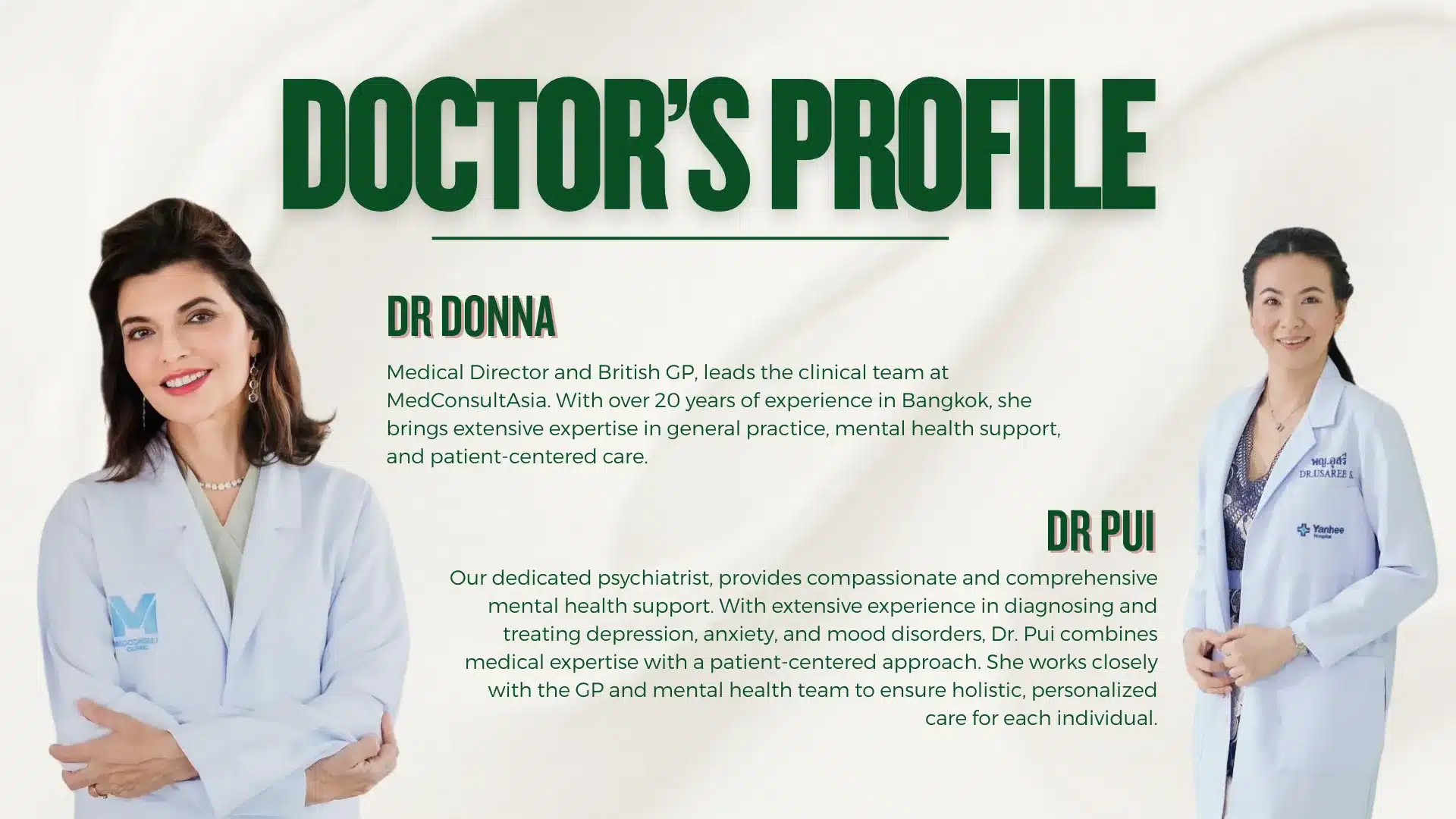
Doctor’s Profile
Dr. Donna Robinson, our British GP and Medical Director, has over 20 years of experience providing comprehensive general and mental health care in Bangkok. She is known for her patient-centered approach and dedication to improving emotional wellbeing.
Dr. Pui, our psychiatrist, specializes in anxiety disorders, panic conditions, and mood-related issues. Her expertise in diagnosis and treatment allows patients to feel supported and understood while receiving effective, modern mental health care. Together, both doctors offer a holistic and professional approach to anxiety management.
Final Thoughts
Anxiety is a real medical condition—not a personal flaw. When understood and treated properly, most people experience significant improvement. Whether your symptoms involve constant worry, physical tension, panic episodes, or difficulty sleeping, a professional evaluation is a valuable first step.
Frequently Asked Questions (FAQs)
Is anxiety normal?
Yes. Anxiety is a natural response to stress. It becomes a concern when excessive, persistent, or disruptive.
Can anxiety cause physical symptoms?
Absolutely. Anxiety can cause rapid heartbeat, chest tightness, nausea, dizziness, tremors, and sleep issues.
Can anxiety be cured?
Many people experience significant improvement with therapy, lifestyle changes, and, in some cases, medication. Long-term management is very achievable.
Is anxiety the same as panic disorder?
No. Panic disorder involves sudden panic attacks. Anxiety tends to be persistent and gradual rather than abrupt.